🕓 24/7 support · Reply within 1 hourAdmin🌐 EN
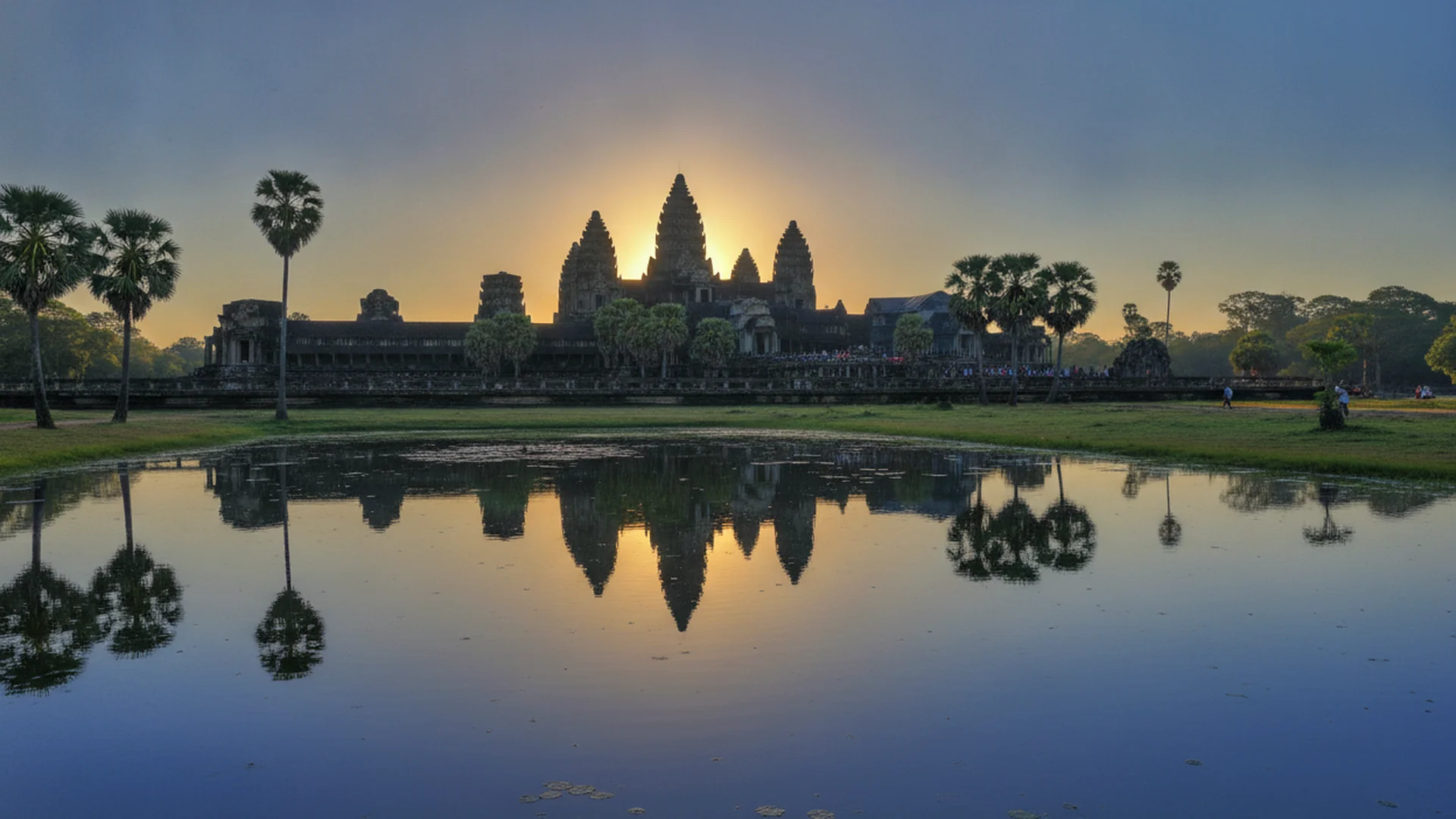
Angkor Wat at sunrise mirrored in the reflecting pool, Siem Reap
Vietnam-Cambodia Itinerary

2 Week Vietnam and Cambodia Itinerary: The Perfect 14-Day Route

Hanoi → Halong Bay → Hoi An → Ho Chi Minh City → Phnom Penh → Siem Reap

Angkor Wat at sunrise mirrored in the reflecting pool, Siem Reap
Vietnam-Cambodia Itinerary📅 Updated 2026-06-17 · last reviewed by Phuong Le📖 29 min readPLPhuong Le15-yr Hanoi history guide
Last reviewed by Phuong Le: 2026-06-17 · Quarterly review

Quick answer

14 days from Hanoi to Siem Reap: Days 1–3 Hanoi + Halong Bay overnight; 4–6 Hoi An via Da Nang; 7–9 Ho Chi Minh City + Mekong day trip; 10–11 Phnom Penh; 12–14 Siem Reap (Angkor at sunrise). Open-jaw flights, e-visas, and a HCMC–Phnom Penh flight or 6–7 hr bus save time.

Open-jaw: Hanoi → Siem ReapOvernight Halong Bay cruiseHCMC–Phnom Penh: flight or 6–7 hr bus

Why this guide

🗺️12,000+ trips run since 2011
✍️Written by our Hanoi DMC team, not freelancers
🔄Reviewed quarterly · last update Jun 2026
🛡️Free 48-hour hold · refund-if-cheaper
💬WhatsApp reply within 1 hour

About this guide

This 14-day route moves through three distinct countries and a range of landscapes — from the limestone karst bay of Halong, where roughly 2,000 islets rise from waters no deeper than 10 metres, to the canal networks of the Mekong Delta and the sandstone galleries of the Angkor Archaeological Park, which covers approximately 400 km² in Siem Reap Province. The itinerary is structured around internal flights and one cross-border transit, keeping overland travel manageable while connecting Hanoi, Da Nang, Ho Chi Minh City, Phnom Penh, and Siem Reap in a logical geographic arc.

Vietnam occupies the first eight days and divides naturally into three zones. The north opens in Hanoi's Old Quarter — a grid of 36 historically trade-specific streets dating to the 11th century — before an overnight cruise on Halong or Lan Ha Bay. Central Vietnam centres on Hoi An Ancient Town, a UNESCO World Cultural Heritage Site inscribed on 4 December 1999, where 1,360 ancient monuments sit within a compact old town, and on My Son Sanctuary, the religious capital of the Champa Kingdom from the 4th to the 13th century, located about 36 km south of Hoi An. The south pairs Ho Chi Minh City's key landmarks — the War Remnants Museum, Reunification Palace, and Ben Thanh Market — with a day trip into the Mekong Delta, where Ben Tre's coconut-lined canals or the dawn trade at Cai Be floating market offer a ground-level view of how the river shapes daily life.

Cambodia fills the final six days. Phnom Penh introduces the country through its Royal Palace — built in 1866, its Silver Pagoda containing a gold Buddha set with 9,584 diamonds — and through the Tuol Sleng Genocide Museum and the Killing Fields of Choeung Ek, 15 km outside the city, which together memorialise the estimated 1.7 to 2.2 million victims of the Khmer Rouge regime. Siem Reap then delivers four days at Angkor, where the 12th-century temple of Angkor Wat covers 1,626,000 m², Angkor Thom's Bayon temple carries 216 stone faces, and Ta Prohm has been left largely uncleared to document the effect of strangler fig roots on sandstone. The itinerary closes with optional extensions to Koh Rong from Phnom Penh, roughly four to five hours by road, or to Phu Quoc via a one-hour flight from Siem Reap back to Ho Chi Minh City.

Key facts & good to know

Best time to go
Oct–Nov for Halong Bay; Nov–Apr for Hoi An, HCMC & Cambodia (dry season); avoid Vietnam's central coast in Oct–Nov typhoon risk
Currency
Vietnamese Dong (VND) in Vietnam; Cambodian Riel (KHR) in Cambodia — USD is widely accepted in Cambodia and at tourist sites
Street-food costs
Most Hanoi street dishes cost 10,000–50,000 VND (~USD $0.40–$2); carry cash as most vendors don't accept cards
Power & plugs
Vietnam & Cambodia both run on 220V/50Hz; sockets are Type A (two flat pins) and Type C (two round pins) — carry a universal adaptor
Time zone
Both Vietnam and Cambodia run on ICT (Indochina Time), UTC+7 — no time change crossing the border
Getting around
Flights link Hanoi–Da Nang–HCMC; Phnom Penh–Siem Reap is ~5–6 hrs by road (322 km); border crossings include Moc Bai–Bavet (road) or Chau Doc–Phnom Penh (Mekon…
Scam note
In Hanoi's Old Quarter, agree prices before eating or riding; metered taxis and ride-hailing apps (Grab) are safer than unmarked cabs
Languages
Vietnamese in Vietnam; Khmer in Cambodia — English is spoken at most hotels, tour operators, and major tourist sites in both countries

Pick your route · 3 alternatives

Route A · Recommended

Hanoi → Halong Bay → Hoi An → Ho Chi Minh City → Phnom Penh → Siem Reap

Fly into Hanoi, spend two days in the capital, then join a one-night cruise on Halong or Lan Ha Bay before flying south to Hoi An. After two days in the Ancient Town, fly to Ho Chi Minh City for the Mekong Delta day trip, then cross into Cambodia by air or overland to close the loop in Siem Reap on day 14.

Best for: First-time visitors who want a single north-to-south thread covering Vietnam's main cultural and historical stops before finishing with Cambodia's temple circuit.

Route B · South-to-North

Siem Reap → Phnom Penh → Ho Chi Minh City → Hoi An → Halong Bay → Hanoi

Begin in Siem Reap to tackle the Angkor temples at the start of the trip when energy is highest, then move through Phnom Penh and Ho Chi Minh City before heading north through Hoi An and ending with a Halong Bay cruise followed by a final night in Hanoi. This reversal suits travellers flying into and out of different hubs.

Best for: Travellers with an inbound flight to Siem Reap and an outbound from Hanoi, or those who prefer to prioritise the Angkor circuit before fatigue sets in later in a two-week trip.

Route C · Extended Beach Finish

Hanoi → Halong Bay → Hoi An → Ho Chi Minh City → Phnom Penh → Siem Reap → Koh Rong or Phu Quoc

Follow the same 14-day spine as Route A but compress the Siem Reap segment to two days of temple visits and add a 3–4 night beach extension to Koh Rong (Cambodia) or Phu Quoc (Vietnam) at the end, adjusting the total trip to 17–18 days. The beach segment requires either a short domestic Cambodian flight or a return flight to Vietnam.

Best for: Travellers with 17 or more days available who want to decompress at the coast after two weeks of cities, heritage sites, and organised tours.

The honest pacing

We've built this two-week itinerary around a single principle: spend enough time in each place to move past the obvious sites. That means two nights on Halong or Lan Ha Bay rather than a day trip, three nights in Hoi An so there's space for a morning at My Son as well as an evening at the lantern-lit old town, and four full days in Siem Reap rather than the compressed 48-hour temple rush. At the same time, we've kept the route linear and the flights to a minimum, so the days don't disappear in airports.

The practical rhythm runs like this: four days in northern Vietnam (Hanoi and the bay), three days in central Vietnam (Hoi An and surroundings), two days in the south (Ho Chi Minh City and the Mekong Delta), then a border crossing or short flight into Cambodia for two days in Phnom Penh and four in Siem Reap. Street food in Hanoi costs between 10,000 and 50,000 VND per dish, cash is essential for most vendors, and Da Nang airport sits 28 to 30 km from Hoi An — details worth knowing before you book transfers. Where the facts matter for planning, we've included them directly in each day's section.

Route A · day-by-day

The version we book most often. 14 days, ten meal slots, one big nature day, one cultural day, two flexibility buffers built into Day 1 and Day 14.

Day 1

Arrive in Hanoi, Old Quarter street eats

Hanoi greets you with motorbike noise, lake-side temples, and egg coffee that tastes nothing like anything you have tried before.
Arrival
Land at Noi Bai International Airport and transfer to your hotel near Hoan Kiem Lake — the Old Quarter is walkable from most properties in this area, which matters when you are carrying luggage and adjusting to the timezone.
15:00
Check in, drop bags, and walk to Cafe Giang on Hang Gai Street for an egg coffee (cà phê trứng) — a whipped egg-yolk foam over strong Vietnamese coffee, invented here in 1946 and still served by the same family.
16:30
Stroll through the Old Quarter's 36 streets, each historically linked to a specific trade. Look for Ô Quan Chưởng Gate — the sole surviving gate of the wall that once enclosed the Thăng Long Citadel area, originally built in 1749 and reconstructed in 1817.
17:30
Walk the perimeter of Hoan Kiem Lake and cross the red wooden Huc Bridge to visit Ngoc Son Temple, situated on a small island in the lake.
19:00
Join an evening street-food tour starting on or around Hang Dieu and Ta Hien streets. Most dishes — pho, banh mi, bun cha — cost between 10,000 and 50,000 VND (roughly USD $0.40–$2). Carry cash; vendors do not accept cards.
20:30
Pull up a plastic stool at one of the bia hoi corners near Ta Hien Street for draught beer sold by the glass. If your arrival falls on a Friday or Saturday evening, Hang Dao street converts into a night market where vendors sell snail meatballs, grilled quail, and cured pork sausage.
22:00
Return to the hotel on foot — the Old Quarter is compact and walkable — and get an early night. The itinerary moves fast from Day 2 onward.
Cash first, explore second: Street-food vendors, bia hoi stalls, and most small Old Quarter shops operate cash-only. ATMs are available around Hoan Kiem Lake, but withdrawal fees and daily limits vary by card. Withdraw Vietnamese dong (VND) before you start the evening food walk — trying to find a working ATM at 20:00 on a busy weekend night wastes time you could spend eating.
Day 2

Hanoi heritage, coffee, and culture

Day 2 moves at a deliberate pace through eleven centuries of Hanoi history — a walled gate from 1749, a Confucian university from 1070, and a cup of egg coffee invented in 1946 — finishing with water puppets on the lake after dark.
08:00
Start at Cafe Giang in the Old Quarter for egg coffee (cà phê trứng) — a whipped egg-yolk layer over strong Vietnamese coffee, served here since 1946 by the creator's family. Grab a window seat on the narrow upper floor; the drink costs around 30,000–40,000 VND.
08:45
Walk five minutes south to Ô Quan Chưởng Gate, the only surviving gate of the wall that once protected the Thăng Long Citadel area. Originally built in 1749 and reconstructed in 1817, it takes about 15 minutes to examine the brickwork and read the plaques before moving on.
09:15
Continue into the 36-street grid of the Old Quarter, whose origins trace to the 11th century when King Lý Thái Tổ moved the capital here. Walk Hàng Đồng, Hàng Bạc, and Hàng Gai to see how individual streets still carry the names of their original trades — copper, silver, silk.
10:00
Visit Dong Xuan Market, the Old Quarter's largest covered market, established in 1889 during French colonial rule inside a three-storey French Colonial/Soviet-style building. The ground floor sells produce, dried goods, and household items; upper floors carry wholesale clothing and fabric.
10:45
Take a short taxi or 15-minute walk southwest to the Temple of Literature (Văn Miếu), a Confucian temple and Vietnam's first national university, founded in 1070. Allow 60–75 minutes to walk all five walled courtyards, examine the 82 stone doctoral steles (1442–1779), and read the inscriptions around the central Khue Van Pavilion.
12:15
Lunch near the Temple of Literature. Try chả cá — grilled catfish with turmeric, dill, and spring onions, served with soft rice noodles and peanuts — a signature Hanoian dish originating from the Old Quarter's Lá Vọng restaurant. Several restaurants in this neighbourhood serve it; budget around 80,000–150,000 VND per person.
13:30
Head northwest to the Ho Chi Minh Complex, which includes the Ho Chi Minh Mausoleum, his stilted wooden house (built 1958), the Presidential Palace (1906, closed to visitors), and the One Pillar Pagoda. The mausoleum is open Tuesday–Thursday and Saturday–Sunday mornings only (typically 07:30–10:30; closed for maintenance roughly September–November). If timing doesn't allow entry, the exterior and surrounding gardens take about 30 minutes; the full complex with interior visit takes 90 minutes.
15:15
Walk or cycle through the French Quarter along Tràng Tiền and Đinh Tiên Hoàng, passing the yellow-façade Opera House (built 1901–1911 in French neo-classical style), the State Bank building, and a row of preserved colonial-era villas. This is an architectural contrast to the Old Quarter — wider boulevards, larger blocks, tree-lined streets.
16:30
Make your way to West Lake (Hồ Tây), Hanoi's largest lake at roughly 500 hectares. The western shore around Trúc Bạch Lake and Thanh Niên Road is calm in the late afternoon. Walk the promenade as the light drops; small cafes here serve bia hơi (fresh draft beer, typically 5,000–10,000 VND per glass) and bánh tôm (shrimp cakes), a West Lake specialty.
18:00
Return to the Old Quarter for dinner. Hàng Đào and the surrounding lanes are transitioning into the weekend night market setup by early evening. Street dishes — snail meatballs, grilled quail, cured pork sausage — cost between 10,000 and 50,000 VND; carry cash as most vendors do not accept cards.
19:30
Attend the water puppet show at the Thăng Long Water Puppet Theatre on the edge of Hoàn Kiếm Lake. Performances run approximately 50 minutes; puppeteers stand waist-deep behind a bamboo screen operating lacquered puppets on submerged rods to depict scenes from Vietnamese folklore. Book tickets in advance — shows sell out on evenings with tour groups.
20:30
Evening walk around Hoàn Kiếm Lake (about 1.8 km perimeter) to the illuminated Turtle Tower and the red Huc Bridge leading to Ngoc Son Temple. The lakeside is pedestrianised on weekend evenings. From here it is a 5–10 minute walk back into the heart of the Old Quarter.
Ho Chi Minh Mausoleum: check the schedule before you go: The mausoleum is closed for roughly two months each year — typically September through November — while Ho Chi Minh's embalmed body is sent to Russia for maintenance. Opening hours on active days are limited to morning sessions (around 07:30–10:30), and visitors must dress modestly with shoulders and knees covered. Confirm the current schedule with your hotel or the official Vietnam government tourism portal before building the day around an interior visit. If it is closed, the grounds, the stilted house, and the One Pillar Pagoda remain accessible and account for the majority of what most visitors want to see.
Day 3

To Halong/Lan Ha Bay; board overnight cruise

A four-hour drive from Hanoi delivers you to one of Vietnam's most recognisable seascapes: roughly 2,000 limestone islets rising from shallow emerald water, with a floating cabin, a paddle, and a fishing line waiting for you aboard your overnight cruise.
07:30
Depart Hanoi by road transfer toward Halong Bay. The drive covers approximately 160 km and takes around 3.5–4 hours depending on traffic. Settle in and watch the Red River Delta flatlands give way to karst country as you approach the coast.
11:30
Arrive at the embarkation pier. Complete boarding formalities, meet your cruise crew, and receive a cabin briefing. Halong Bay's UNESCO-designated Heritage Zone covers 434 km² and contains 775 islets — the cruise will navigate within this protected boundary.
12:00
Lunch is served on deck as the vessel moves out into the bay. The bay's name, Hạ Long, translates as 'descending dragon,' referencing a legend of a dragon and her children defending Vietnam from invaders. Watch the islets multiply around you as the mainland disappears.
14:00
Kayaking session among the karst formations. Halong Bay's water measures only about 10 metres at its deepest point, making the bay unusually shallow and the limestone bases clearly visible in calm conditions. Paddle into cave arches and between island corridors accessible only by kayak.
15:30
Cave visit or swimming stop, depending on your cruise operator's itinerary. Many cruises anchor near a designated cave for a guided walk through stalactite and stalagmite chambers, while others offer a swim platform directly off the boat.
17:30
Return to the sundeck for the sunset hour. Drinks are available from the onboard bar. This is a good time to note the bay's subtropical climate: October to November brings mild, dry conditions and clear visibility, while summer months are hot and humid.
19:00
Dinner served in the onboard restaurant. Overnight cruises function as floating hotels with private cabins, a restaurant, and a sundeck, so facilities vary by vessel category. Confirm meal inclusions with your operator before boarding.
20:30
Squid fishing from the stern deck. Crew provide lines and small lights to attract squid to the surface. Catches vary by season but the activity runs most evenings regardless of result — it is as much a social event on deck as a fishing exercise.
22:00
Retire to your cabin as the vessel anchors overnight in a sheltered bay. Halong Bay received UNESCO World Natural Heritage recognition twice — first in 1994 for scenic landscape and again in 2000 for its geological and geomorphological significance.
Lan Ha Bay vs. Halong Bay: know the difference before booking: Some cruises operate in Lan Ha Bay, located south of Halong Bay near Cat Ba Island rather than within the main Halong Heritage Zone. Lan Ha Bay forms part of the broader Ha Long Bay–Cat Ba Archipelago property, expanded via UNESCO boundary modification in 2023 to cover 65,650 ha across 1,133 islands. It is quieter than the central Halong zone and equally legitimate scenically, but if your itinerary specifically promises Halong Bay, confirm the navigation area in writing before you book.
Day 4

Cruise sunrise; fly Da Nang; transfer Hoi An

Day 4 begins on the water at dawn, then trades limestone karsts for Ancient Town lanes — a long travel day that ends in Hoi An by early evening.
06:00
Wake for sunrise on the bay. Halong Bay's shallow waters — only about 10 metres deep — reflect the karst silhouettes in calm conditions. Join tai chi on the sundeck or find a quiet spot with a coffee before breakfast is served.
07:30
Brunch served onboard. The cruise ship functions as a floating hotel with a full restaurant; this is your last proper meal before a stretch of transit, so eat well.
09:00
Begin packing and settling your cabin bill. Cruises typically collect any extras — drinks, spa treatments — at this point. Have your luggage outside your cabin door by 09:30.
10:00
Disembark late morning at the pier. Transfer by road back toward Hanoi — allow approximately 3.5 hours depending on traffic on the Hanoi–Halong highway.
13:30
Arrive at Noi Bai International Airport, Hanoi. Check in for your domestic flight to Da Nang. Allow at least 90 minutes before departure for check-in and security.
15:30
Depart Hanoi on a domestic flight to Da Nang. Flight time is roughly one hour.
16:30
Land at Da Nang International Airport. Da Nang is the nearest international airport to Hoi An, approximately 28–30 km south. Your pre-arranged transfer will meet you at arrivals.
17:30
Arrive in Hoi An. Check into your accommodation, freshen up, and take an early evening walk along the Thu Bon River before the lanterns are lit.
19:00
Dinner in the Ancient Town. Hoi An was a trading port from the 15th to 19th century and its food reflects those influences. Seek out cao lau — a noodle dish unique to Hoi An — at one of the old town's street stalls or riverside restaurants.
Build buffer time between disembarkation and your flight: The cruise-to-Hanoi airport transfer covers roughly 160 km and takes 3–3.5 hours under normal conditions, but holiday traffic or road incidents can push that to 4+ hours. Book a flight no earlier than 15:00 from Noi Bai to give yourself a realistic window after a late-morning disembarkation. Missing a domestic connection means re-routing and an unplanned night in Hanoi, which disrupts the rest of the itinerary.
Day 5

Hoi An Ancient Town highlights and tailors

Hoi An's Ancient Town rewards slow exploration on foot: a 15th-century trading port with 1,360 heritage monuments, a cluster of tailors who can turn fabric into finished clothing overnight, and a lantern-lit river come dusk.
08:00
Walk to the Japanese Covered Bridge — the town's most recognisable structure and one of 844 buildings listed on the UNESCO heritage inventory. Arrive early before tour groups arrive mid-morning.
08:45
Work through the assembly halls along Tran Phu Street. Each was built by a different Chinese merchant community (Fujian, Cantonese, Chaozhou) during the 15th–19th-century trading era and functions as both temple and community hall.
10:00
Breakfast at one of the market stalls near Hoi An Central Market: cao lau — thick wheat noodles in a pork broth made with water traditionally drawn from local Ba Le Well — and white rose dumplings, a Hoi An-specific dish of translucent shrimp dumplings that resemble the flower.
11:00
Visit Hoi An Central Market for a look at local produce, fresh herbs, and fabric stalls. The market is most active in the morning and reflects the town's continuing role as a textile and trade hub.
12:00
First tailor fitting. Hoi An has built its modern reputation on custom-tailored clothing — a legacy of the Silk Road era when silk was effectively currency here. Choose fabric and style; most tailors require two fittings and 24–48 hours for completion.
13:30
Lunch and a rest during the hottest part of the afternoon. The riverfront along Bach Dang Street has shaded cafes with views across the Thu Bon River.
15:30
Second tailor fitting if same-day adjustments are needed, or browse the remaining heritage houses open to visitors with a combined ticket (admission covers entry to five sites chosen from a designated list).
17:30
Walk the riverfront as the light drops. Vendors begin setting out silk lanterns along the river embankment ahead of the evening. If visiting on the 14th day of the lunar month, the full-moon Lantern Festival fills the streets.
18:30
Board a small wooden boat from the riverside for a dusk lantern ride on the Thu Bon River. Passengers release floating paper lanterns on the water — a practice tied to the monthly Lantern Festival but available most evenings on a smaller scale.
20:00
Dinner in the Ancient Town. Return to a riverfront restaurant for a fuller meal; the town's 27 national-level and 50 provincial-level heritage sites are lit softly after dark, making an after-dinner walk through the old streets worthwhile before returning to your hotel.
Tailor timing: allow at least 48 hours: Hoi An's tailors are genuinely skilled, but rushing an order to same-day completion increases the risk of poor finishing. If you arrive on Day 5 and depart on Day 7, place your order at the first morning fitting and collect after your second fitting the following afternoon. Bring a reference photo of what you want and check seams and lining before paying the balance.
Day 6

Countryside ride or My Son Sanctuary

Day 6 splits into two distinct options: a slow morning cycling through rice paddies and riding coconut basket boats, or a half-day at the Cham ruins of My Son Sanctuary — both ending at the coast.
07:00
Breakfast in Hoi An before the day splits. Countryside riders head to the outskirts of town to hire bicycles; My Son-bound travellers meet their transport for the 36 km, roughly one-hour road journey southwest into the Thu Bồn River valley.
08:30
OPTION A — Countryside ride: Cycle through rice paddy fields and villages on the outskirts of Hoi An. Local guides arrange a coconut basket boat session on the river or Thu Bồn canals, where boatmen spin the round woven craft in circles — a technique developed by local fishermen.
08:30
OPTION B — My Son Sanctuary: Arrive at the site, the religious and political capital of the Champa Kingdom from the 4th to the 13th century CE. The sanctuary originally comprised over 70 brick tower-temples; by 1975 only 32 remained, with 20 still intact. Walk through the eight surviving monument groups and examine the sandstone bas-reliefs dedicated primarily to the Hindu god Shiva. The site was inscribed as a UNESCO World Cultural Heritage Site in 1999.
11:30
Both groups make their way back toward Hoi An. My Son visitors return along the same road; countryside cyclists complete their loop and return bikes. Stop for a simple lunch at a local eatery near the Ancient Town.
13:30
Afternoon at leisure on the coast. An Bang Beach sits about 4 km from Hoi An's old town and offers a quieter stretch of sand compared to China Beach further north. Alternatively, seek out Hidden Beach, a smaller cove accessible by a short walk or boat.
17:00
Return to Hoi An as the light softens. The old town's lanterns come on after dusk; if today falls on the 14th day of the lunar month, the full-moon Lantern Festival will be underway on the streets around the Japanese Covered Bridge and the Ancient Town.
19:00
Dinner in Hoi An. The town's food scene includes dishes such as cao lầu (thick rice noodles with pork and greens), white rose dumplings, and bánh mì — all strongly associated with Hoi An specifically. Most street dishes remain in the 10,000–50,000 VND range; carry cash as many smaller vendors do not accept cards.
My Son in the midday heat: The My Son valley is enclosed by mountains and becomes noticeably hot by late morning. The site covers significant ground and the remaining tower-temples offer limited shade. Aim to arrive as early as 08:00–08:30 and plan to leave by 11:00. Bring water and a hat; the path between monument groups is largely open ground.
Day 7

Fly to Ho Chi Minh City; city essentials

Day 7 pivots south: a short flight drops you into Vietnam's largest city, where French colonial architecture, a sobering war museum, and a sprawling market fill an afternoon before the city's rooftop bars light up at dusk.
Morning
Fly from Da Nang (or Hoi An transfer) to Tan Son Nhat International Airport, Ho Chi Minh City. Flight time is roughly one hour. On landing, head directly to your hotel in District 1 — the central district that puts every landmark within walking distance or a short ride.
12:00
Check in and grab lunch near Ben Thanh Market. The area around the market offers bánh mì, bún bò, and hủ tiếu at street stalls, most priced between 30,000 and 80,000 VND. Ben Thanh itself is worth a brief walk-through for an overview of local produce, dried goods, and souvenirs — though prices here are typically higher than at neighbourhood markets.
13:30
War Remnants Museum. Budget 1.5–2 hours. The museum documents the Vietnam War through photographs, military hardware, and first-person accounts. The displays are direct and factually dense — not a comfortable visit, but an important one for understanding the city's modern history.
15:30
Walk or take a short ride to the Reunification Palace, the former Presidential Palace of South Vietnam and the site where the war officially ended on 30 April 1975. Self-guided tours cover the intact war rooms, communications bunker, and reception halls. Allow around 45 minutes.
16:30
Notre-Dame Cathedral Basilica of Saigon and the Central Post Office are a two-minute walk apart on Công Xã Paris square. The cathedral is a French colonial structure completed in 1880; the post office, designed in 1886–1891, remains a functioning post office with its original iron-frame interior largely intact. Both are exterior and interior visits; the post office interior is free to enter.
18:00
Return to District 1 and choose a rooftop bar for the 18:00–19:00 window to catch sunset over the skyline. Several rooftop venues sit above hotels on Nguyen Hue Boulevard and Dong Khoi Street. Drinks pricing varies widely — confirm costs before ordering.
19:30
Dinner in District 1. The streets around Bui Vien and the blocks north of Ben Thanh offer a dense concentration of local restaurants. Ho Chi Minh City is noted for its southern Vietnamese cooking; hủ tiếu (pork and seafood noodle soup) is a regional specialty worth trying.
War Remnants Museum: prepare before you go: The War Remnants Museum presents graphic photographic evidence of the conflict, including Agent Orange casualties and graphic combat imagery. It is historically valuable but genuinely distressing. If you are travelling with children or anyone sensitive to this material, review the museum's content sections in advance. The museum is typically open from 07:30 to 18:00; arriving before 14:00 avoids the largest tour-group crowds. Admission is charged; carry cash in Vietnamese dong as card acceptance at the ticket desk is not guaranteed.
Day 8

Mekong Delta day trip (Ben Tre or Cai Be)

A full day on the water in the Mekong Delta — narrow canals shaded by coconut palms, a sampan ride, a look at cottage coconut industries, and a light cycling loop through orchards — before returning to Saigon for an evening street-food tour.
07:00
Depart Ho Chi Minh City by road toward Ben Tre or Cai Be. Ben Tre sits within the Mekong Delta's network of nine river distributaries; Cai Be in Tien Giang province is roughly the same travel distance. Expect 1.5–2 hours by minibus depending on traffic leaving the city.
09:00
Board a wooden river boat and set out on the main distributary channel. The Mekong Delta — formed by the Mekong River's nine distributaries — is a vast network of rivers, swamps, and islands that serves as Vietnam's primary rice-producing region.
09:45
Transfer to a sampan (small hand-rowed boat) to navigate the quiet back canals. Palm-lined waterways here are narrow enough that the canopy closes overhead; the pace drops considerably compared to the main river.
10:30
Stop at a coconut cottage industry workshop. Ben Tre province — nicknamed the 'Land of Coconuts' — is known for producing coconut candy, coconut oil, and woven goods from palm fronds. Watch workers process raw coconut on hand-operated presses and rollers.
11:15
Mount bicycles for a light, flat cycling loop through orchard land. Tracks pass between longan, rambutan, and pomelo trees. The terrain is level; the distance is short and suitable for casual riders.
12:30
Sit down to an orchard lunch at a local family garden. Typical dishes include river fish, fresh-cut tropical fruit from the surrounding trees, and steamed rice — all sourced locally.
14:00
Reboard the river boat for a leisurely return passage along the canal network, then transfer back to the minibus for the road journey to Ho Chi Minh City.
16:30
Arrive back in Ho Chi Minh City. Rest at the hotel and freshen up before the evening begins.
18:30
Join an evening street-food tour in Ho Chi Minh City. The city is well regarded for dishes such as bánh mì, bún bò, and hủ tiếu. Tours typically move between Ben Thanh Market, District 1 alleyways, and local neighbourhood stalls, covering five to seven dishes over two to three hours.
21:00
Evening food tour concludes. Return independently to your hotel on foot or by ride-hail app.
Choose Ben Tre or Cai Be based on timing, not just interest: If you want to see Cai Be floating market — one of the largest wholesale floating markets in the Mekong Delta — note that it is most active at dawn when traders sell directly from boats. A day-trip departing Ho Chi Minh City at 07:00 will arrive well after peak trading. Ben Tre's canal and coconut-industry experience, by contrast, runs throughout the morning and suits this itinerary's timing better. If the floating market is a priority, consider an overnight stay in the delta so you can be on the water by 05:30–06:00.
Day 9

Travel to Phnom Penh; riverside evening

Day 9 bridges two countries: a short flight or overland crossing delivers you to Phnom Penh, Cambodia's capital at the confluence of three rivers, in time for a riverside evening of Khmer food and river breezes.
06:00
Early checkout from your Ho Chi Minh City hotel. If flying, head to Tan Son Nhat International Airport — the flight to Phnom Penh International Airport takes roughly 1 hour. If travelling overland, the Moc Bai–Bavet road crossing or the Mekong speedboat via Chau Doc are both established options, though they add several hours to your day.
08:30
Board your flight from Ho Chi Minh City. The crossing is short — keep your passport accessible and have any required visa documentation ready for Cambodian immigration on arrival.
09:30
Land at Phnom Penh International Airport. Clear immigration and collect luggage. Pre-arranged airport transfers or metered taxis are available to central Phnom Penh; the journey into the Riverside or BKK1 districts typically takes 30–45 minutes depending on traffic.
11:00
Check in to your hotel near Sisowath Quay (Riverside) or BKK1. Riverside properties give you direct access to the Tonlé Sap promenade; BKK1 sits slightly inland but offers a dense cluster of cafes and restaurants.
12:30
Lunch at a local restaurant near your hotel. Try Khmer staples such as amok (fish or chicken steamed in coconut curry with kroeung spice paste) or bai sach chrouk (grilled pork over rice), both widely available around the Riverside area.
14:00
Short orientation walk along Sisowath Quay. The promenade runs along the broad Tonlé Sap River and gives a first look at the city's layout — you can see the Royal Palace compound walls and the spire of the Silver Pagoda from the riverfront. Note that Phnom Penh sits at Chaktomuk ('four faces'), the confluence of the Mekong, Tonlé Sap, and Bassac rivers.
15:30
Optional stop at the National Museum of Cambodia, a short walk from the riverfront, which opened in 1920 and holds the world's largest collection of Khmer art. Admission is straightforward and the galleries are not large — allow 60–90 minutes. Save the Royal Palace and S-21 for Day 10.
17:30
Board a sunset river cruise on the Tonlé Sap. Numerous operators depart from the Riverside piers; a typical cruise runs 60–90 minutes and takes in views of the confluence as the light changes. Check departure times locally, as they vary by operator and season.
19:30
Khmer dinner at one of the restaurants along Sisowath Quay. Dishes to look for include lok lak (stir-fried beef with a lime-pepper dipping sauce), samlor machu (sour soup), and fresh river fish. The promenade stays lively into the evening with locals and travellers alike.
21:00
Return to your hotel. Day 10 covers the Royal Palace, Tuol Sleng (S-21), and the Killing Fields of Choeung Ek — an emotionally demanding day that benefits from an early start.
Visa and entry: sort it before you land: Most nationalities can obtain a Cambodian e-visa online in advance (check the official evisa.gov.kh portal for eligibility and current fees). Visas on arrival are also available at Phnom Penh airport, but queues can be slow during busy periods. If crossing overland at Moc Bai–Bavet, arrange your visa before reaching the border — unofficial 'processing fees' are commonly requested at land crossings and you are in a stronger position if your paperwork is already in order.
Day 10

Phnom Penh history and royal quarter

Phnom Penh's darkest chapter sits alongside its most ornate architecture — a morning at Tuol Sleng and Choeung Ek followed by an afternoon at the Royal Palace covers roughly 1,000 years of Cambodian history in a single day.
08:00
Take a tuk-tuk to Tuol Sleng Genocide Museum (S-21), a former high school converted into a Khmer Rouge detention centre between 1975 and 1979. Budget 1.5–2 hours to move through the cellblocks, prisoner photographs, and documentation rooms at a measured pace.
10:00
Hire the same tuk-tuk to continue 15 km outside the city to the Killing Fields of Choeung Ek, the primary memorial to the estimated 1.7–2.2 million victims of the Khmer Rouge regime. The audio guide runs approximately 60 minutes and covers each excavated pit in sequence.
12:00
Return to the riverside and take lunch along Sisowath Quay, the promenade facing the Tonlé Sap River. Several restaurants here serve Khmer staples such as fish amok and lok lak at mid-range prices — allow 45–60 minutes.
13:30
Walk or tuk-tuk a short distance to the Royal Palace complex, constructed in 1866 by King Norodom. Begin with the Silver Pagoda inside the grounds, which houses a life-size gold Buddha set with 9,584 diamonds. Allow 1.5 hours for both the palace grounds and pagoda.
15:30
Optional visit to the National Museum of Cambodia, opened in 1920, which holds the world's largest collection of Khmer art. The museum is a short walk from the palace and typically requires 45–60 minutes.
17:00
Return to your hotel to collect luggage if you are moving on today. Check bus or flight schedules to Siem Reap: the road journey is approximately 322 km and takes 5–6 hours; a short flight takes under one hour. If staying another night, the riverside at dusk is a straightforward way to decompress after a heavy morning.
18:30
Depart for Siem Reap by bus or airport, or settle in for dinner along Sisowath Quay if overnighting in Phnom Penh.
Sequence Tuol Sleng and Choeung Ek deliberately: Most guides recommend visiting S-21 before Choeung Ek so the documentation and prisoner records at the museum provide context for what you see at the memorial site 15 km away. Reversing the order can make the historical narrative harder to follow. Both sites are emotionally demanding — build in a quiet break between them rather than rushing straight from one to the other.
Day 11

Angkor Wat sunrise and Grand Circuit

Day 11 centers on Angkor Wat at first light, then a clockwise loop through four lesser-visited temples on the Grand Circuit before a hilltop sunset.
05:00
Arrive at Angkor Wat's west entrance before dawn. Position yourself at the reflecting pools along the main causeway to catch the central tower and its four smaller spires mirrored in the water as the sky lightens. On the equinoxes, the sun rises precisely from the top of the central tower — an astronomical alignment built into the 12th-century design by King Suryavarman II.
06:30
Enter the temple complex once gates open. Walk the outer gallery (187 m long on the west side) to examine the sandstone bas-reliefs depicting the Hindu epic scenes. The central shrine rises 65 m above ground; the temple proper covers 86,000 m². Allow 90 minutes to move through the three enclosure levels at a steady pace.
08:00
Return to your guesthouse or hotel for breakfast and to escape the mid-morning heat buildup before the Grand Circuit loop.
09:30
Depart by tuk-tuk or bicycle for Preah Khan, roughly 3 km north of Angkor Thom. This large 12th-century Buddhist monastery-temple built by Jayavarman VII has long colonnaded galleries and a two-storey freestanding structure — unusual in Khmer architecture. Expect to spend around 45 minutes here.
10:30
Continue to Neak Pean, a small 12th-century artificial island temple set in the middle of a reservoir. A short raised boardwalk leads to the central shrine. The surrounding water level varies by season; the dry-season visit gives clear views of the full island layout. Allow 20–25 minutes.
11:00
Drive to Ta Som, a compact late-12th-century Buddhist temple. Its east gopura (entrance tower) is almost entirely consumed by the roots of a strangler fig tree — similar to Ta Prohm but with far fewer visitors. Spend around 30 minutes before the midday heat peaks.
11:45
Head back toward Siem Reap town for lunch. Restaurants on Pub Street and the surrounding lanes serve Khmer staples such as fish amok and lok lak from around USD $4–8 per dish. Rest during the hottest part of the afternoon, roughly 12:30–15:30.
15:30
Hire a tuk-tuk to East Mebon, a 10th-century Hindu temple built by Rajendravarman II on an island in what was once the East Baray reservoir (now dry). The upper platform has sandstone elephant statues at each corner and offers open views across the flat Angkor plain. Allow 30–40 minutes.
16:30
Drive to Pre Rup or Phnom Bakheng for sunset — both are elevated temple-mountains with wide views. Pre Rup, also built by Rajendravarman II, is less crowded than Phnom Bakheng; Phnom Bakheng sits 67 m above the plain and allows views toward Angkor Wat's towers to the south. Check current APSARA access rules before choosing, as visitor caps apply at Phnom Bakheng.
18:00
Return to Siem Reap. Optional evening: watch a traditional Apsara dance performance at one of several venues in town. This classical Khmer court dance, depicting celestial nymphs from Hindu mythology, is recognised by UNESCO as Intangible Cultural Heritage and runs nightly.
Angkor Wat sunrise crowd reality: Angkor Wat draws over four million visitors per year, and the sunrise reflecting-pool spot is the single most photographed position in the entire park. Arrive by 05:00 at the latest — the best positions along the pool fill up 30–45 minutes before first light. Weekends and peak season (November–February) are noticeably busier. If the crowd at the main causeway is already dense, move to the library buildings on either side of the path for a slightly elevated, less-crowded angle.
Day 12

Angkor Thom and Ta Prohm; Tonle Sap

Day 12 moves from carved stone to open water — Bayon's 216 faces in the morning, Ta Prohm's fig-wrapped galleries by midday, then an afternoon on Tonlé Sap, Southeast Asia's largest freshwater lake, which swells to five times its dry-season size when the…
07:30
Enter Angkor Thom through the South Gate, a causeway flanked by stone devas and asuras. The walled capital was built by King Jayavarman VII after the Cham sack of Angkor in 1177.
08:00
Spend roughly 45 minutes at the Bayon temple, the centrepiece of Angkor Thom. Walk the upper terrace to see the 216 serene stone faces at close range — early morning light falls directly on the carvings.
09:00
Walk the Terrace of the Elephants and the Terrace of the Leper King, both part of the royal ceremonial quarter on Angkor Thom's central square. The bas-reliefs along the Terrace of the Elephants stretch approximately 300 metres.
10:00
Transfer by tuk-tuk or car to Ta Prohm, about 10 minutes from Angkor Thom. Unlike most temples in the 400 km² Angkor Archaeological Park, Ta Prohm was left largely uncleared by conservation teams; strangler fig trees and creeping lichens have grown through its sandstone galleries over centuries.
11:30
Return to Siem Reap town for lunch at a local restaurant. Khmer staples to try include fish amok (coconut-steamed freshwater fish) and kuy teav (rice noodle soup) — both widely available near the Old Market area.
13:30
Head to the Tonlé Sap Lake pier, roughly 11 km south of Siem Reap. During the rainy season, the lake expands from approximately 2,700 km² to 16,000 km², supporting floating villages built entirely on the water. If the water level is sufficient, take a boat tour through one of the floating villages; in the dry season, a Khmer cooking class in town is a practical alternative.
15:30
Return to Siem Reap. The lake is a UNESCO Biosphere Reserve and one of the region's most productive freshwater fisheries — the boat ride itself provides context for why the Mekong's seasonal reversal matters to millions of people living along it.
19:00
Evening at leisure in Siem Reap. Traditional Apsara dance — a classical Khmer court dance recognised by UNESCO as Intangible Cultural Heritage — is performed nightly at several venues and pairs well with a set Khmer dinner.
Check Tonlé Sap water levels before booking: The floating village experience is highly seasonal. Tonlé Sap Lake contracts significantly in the dry season (roughly November to May), and some floating villages become inaccessible or are relocated closer to the water's edge. Ask your guide or hotel the evening before Day 12 whether the boat tour is operating; if it is not viable, a Khmer cooking class in Siem Reap is a worthwhile substitute that uses the same afternoon time slot.
Day 13

Siem Reap at leisure: countryside and shows

Day 13 eases off the temple circuit — a morning in the countryside, an afternoon for spa treatments and market browsing, and an evening of acrobatic performance followed by dinner in the Old Market area.
07:00
Optional early start for those choosing the Kulen waterfalls excursion or a quad-bike/bicycle ride through rice paddies and silk weaving villages in Siem Reap's countryside — a practical contrast to the past two days of temple-hopping.
09:00
Cyclists and riders pass through floating village communities on the fringes of Tonlé Sap Lake — Southeast Asia's largest freshwater lake, which expands from roughly 2,700 km² to 16,000 km² during the rainy season and holds UNESCO Biosphere Reserve status.
11:30
Return to town and check into a spa for a traditional Khmer massage or treatment. Siem Reap has a range of mid-range and boutique spa options within a short tuk-tuk ride of the Old Market.
13:30
Lunch at a cafe near the Old Market (Phsar Chas). The area around Sivatha Street and the market itself offers Khmer rice dishes, noodle soups, and fresh fruit at street-side stalls — a lower-cost, local alternative to the tourist restaurants on Pub Street.
15:00
Browse the Old Market for lacquerware, Apsara figurines, krama scarves, and silk products. Traditional Apsara dance — a classical Khmer court dance depicting celestial nymphs from Hindu mythology — is recognised by UNESCO as Intangible Cultural Heritage and is represented widely in the carvings and goods on sale here.
17:00
Return to hotel to freshen up before the evening's main event. Confirm your Phare Circus tickets in advance — the show typically runs in the early evening and seats fill quickly.
19:00
Attend a Phare Circus performance. Phare is a Cambodian social enterprise that trains performers from disadvantaged backgrounds in acrobatics, theatre, and live music; shows run approximately 60–75 minutes and combine circus disciplines with Cambodian storytelling.
20:30
Dinner in the Old Market district. The streets around Phsar Chas concentrate Khmer restaurants serving amok (fish or chicken steamed in coconut curry), lok lak (stir-fried beef with lime-pepper sauce), and grilled meats. Most mid-range restaurants are within walking distance of the circus venue.
22:00
Early night recommended — tomorrow involves a departure from Siem Reap International Airport (SAI), which opened in 2023 to replace the old airport and handles regional routes including flights to Bangkok, Singapore, Kuala Lumpur, and Ho Chi Minh City.
Book Phare Circus tickets at least 24–48 hours ahead: Phare Circus performances sell out regularly, particularly during peak season. Purchase tickets directly through the Phare website or ask your hotel concierge to arrange them the day before. The venue is a short tuk-tuk ride from the Old Market, so factor in 15–20 minutes of travel time from dinner — or reverse the order and eat after the show.
Day 14

Siem Reap departure or beach add-on

Day 14 closes a 14-day loop: a morning flight out of Siem Reap's new international airport, with the option to add three or four nights at a beach destination rather than heading straight home.
05:00
Wake early and transfer to Siem Reap International Airport (SAI), the facility that replaced the old airport when it opened in 2023. Allow extra time if your guesthouse is on the far side of town.
06:00
Check in and clear security at SAI, which now handles regional routes to Bangkok, Singapore, Kuala Lumpur, and Ho Chi Minh City. Confirm your departure terminal and gate — the new airport is larger than what many repeat visitors remember.
08:00
Board your flight. If you are closing the loop back to Ho Chi Minh City, the flight takes approximately one hour. From there, a connection to Phu Quoc — Vietnam's largest island — is straightforward for travellers who want a beach finale.
09:30
Optional beach add-on path A — Phu Quoc or Con Dao: fly Siem Reap to Ho Chi Minh City, then connect onward. Con Dao involves a shorter second flight; Phu Quoc has direct connections from Ho Chi Minh City on multiple carriers.
10:00
Optional beach add-on path B — Koh Rong or Sihanoukville: travellers who prefer to stay in Cambodia can backtrack overland from Siem Reap toward Phnom Penh (roughly 5–6 hours by road), then continue to Sihanoukville and the Koh Rong islands — about 4–5 hours from Phnom Penh by road and ferry.
11:00
Optional beach add-on path C — Kep or Kampot: a quieter Cambodian coastal option reachable from Phnom Penh by road in roughly 3 hours. Both towns are known for seafood and a slower pace than Sihanoukville.
Afternoon
If departing without a beach extension, arrive at your onward hub — Bangkok, Singapore, or Kuala Lumpur — in time for an international connection or an overnight stopover. Check your baggage allowance if you purchased silk, ceramics, or other items across Vietnam and Cambodia.
Evening
Beach add-on travellers check in to their chosen island or coastal property and settle in for 3–4 nights of down time before the final homeward flight.
Border crossing and surface route option: If you prefer not to fly, the overland crossing at Moc Bai–Bavet (road) and the Mekong speedboat route via Chau Doc–Phnom Penh are both established options for closing the loop between Cambodia and Vietnam by surface. Factor in extra travel time — overland and river routes typically take 5–8 hours depending on border wait times and connections — and confirm current visa-on-arrival eligibility at the specific crossing you plan to use before departure.

Route B · South-to-North

Show 14-day breakdown · for Halong-skippers

Route B reverses the conventional direction, beginning in Ho Chi Minh City and finishing in Hanoi. This suits travellers flying into southern Vietnam and out of the north, and allows the itinerary to build gradually toward the landscapes of the upper half of the country.

  • Ho Chi Minh City – arrival, orientation, and time in the city's central districts.
  • Day trip to the Mekong Delta, covering the waterway network south of the city.
  • Fly or travel to Siem Reap, Cambodia, for visits to the Angkor temple complex.
  • Return to Vietnam and continue north to Hoi An for time in the old town and surrounding area.
  • Move north to Hue, with visits to imperial-era sites along the Perfume River.
  • Fly to Hanoi for a final stretch covering the Old Quarter and a cruise in Ha Long Bay before departure.

Sample Route B activities: Cu Chi Tunnels day trip from Ho Chi Minh City; boat trip through Mekong Delta canals; sunrise at Angkor Wat; bicycle ride around Hoi An's old town; visit to the Hue Citadel; overnight junk cruise on Ha Long Bay.

Route C · Extended Beach Finish

Show 14-day breakdown · for returning visitors / south-bound flights

Route C follows the same north-to-south spine as Route A but extends the trip to include a beach stay at the end, giving travellers time to decompress before flying home from a southern coastal hub.

  • Hanoi – arrival and time in the Old Quarter.
  • Overnight cruise on Ha Long Bay.
  • Fly south to Hue and visit the imperial citadel and surrounding royal tombs.
  • Continue to Hoi An for the old town, tailors, and nearby countryside.
  • Fly to Siem Reap for the Angkor temple complex.
  • Travel to Ho Chi Minh City.
  • Extend to a beach destination – Phu Quoc Island or Mui Ne – for the final two nights before departure.

Sample Route C activities: Junk boat cruise among the karst islands of Ha Long Bay; guided tour of Hue's Imperial City; lantern-lit streets of Hoi An at dusk; full-day Angkor temple circuit; water sports or beach rest on Phu Quoc Island.

Want this tailored to your dates?

We run these routes ourselves. Send your dates, group size and pace and our Hanoi team will build a custom version — with real prices, not estimates.

What to skip on 14 days

These are the 4 mistakes 80% of first-time Vietnam travellers make when researching online.Phuong Le has personally seen each one destroy trips that could have been excellent.

Booking a one-night Halong Bay cruiseWhen to consider · Only if your schedule allows zero flexibility
A single overnight gives you roughly half a day on the water before turnaround. With the heritage zone covering 434 km² and 775 islets, one night is barely enough time to leave the main anchorage area, let alone kayak the quieter sections near Lan Ha Bay or Cat Ba Island.
Spending a full day at My Son without checking group schedulesWhen to consider · Skip the midday rush entirely
My Son sits 36 km south of Hoi An in an open valley with little shade. Tour groups from Hoi An arrive in large numbers around mid-morning. Of the original 70-plus brick temples, only 20 remain intact after wartime bombing, so the site is relatively compact — two to three hours is sufficient; a full-day commitment in midday heat adds little value.
Trying to cover both Tuol Sleng (S-21) and Choeung Ek on the same morningWhen to consider · Avoid back-to-back if time is tight
S-21 is a former high school that held thousands of detainees between 1975 and 1979; Choeung Ek is 15 km outside the city and memorialises an estimated 1.7–2.2 million victims. The documentary weight of both sites in a single session is considerable, and visitors who rush through one to reach the other typically absorb neither properly.
Scheduling Angkor Wat sunrise without accounting for crowd timing at the reflecting poolsWhen to consider · Consider only if you arrive before 5:00 a.m.
On the equinoxes, the sun aligns precisely over the central tower — a deliberate astronomical feature of the 12th-century design — and the five spires reflect in the pools. With over four million visitors per year to the Angkor Archaeological Park, the reflecting-pool position fills quickly. Arriving after 5:30 a.m. means standing several rows back, which defeats the purpose of the early start.

14-day Vietnam itinerary FAQ

When should I go for this 14-day route?
For smoother weather across both countries, target November to April. North Vietnam (Hanoi/Ha Long) is cool and drier November–March, hot April–June, and stormy July–September; Central Vietnam (Hoi An) is driest February–August and rainy with possible typhoons September–November; the south (Ho Chi Minh City/Mekong) is dry December–April and wet May–November. Cambodia is similar: dry November–April, wet May–October. During Tet (late Jan–Feb) and Khmer New Year (mid‑April), transport and hotels book up and some shops close.
Do I need visas for both countries and how do I cross the border?
Many nationalities can apply online for a Vietnam e‑visa (single entry about US$25; allow 3–7 business days). Cambodia offers an e‑visa (about US$36) or visa on arrival (about US$30 cash); bring a passport photo and ensure 6+ months’ passport validity. Flying Ho Chi Minh City to Phnom Penh is straightforward immigration on arrival; overland/bus crossings can take longer at the border. If taking the Chau Doc speedboat, you can obtain a Cambodian visa at the river border; confirm current e‑visa acceptance and fees on official sites before you go.
What budget should I plan for 2 weeks and what costs most?
Typical daily spend per person excluding international flights: budget US$60–90 (hostels, buses, street food), mid‑range US$120–200 (3–4★ hotels, some flights, guided days), higher US$250–400+ (boutique/5★, private tours). Big‑ticket items: overnight bay cruise US$130–250+, domestic flights US$40–120 per leg, Angkor pass US$37 (1‑day), US$62 (3‑day), US$72 (7‑day), Mekong day trip US$25–90. Tuk‑tuk in Siem Reap is about US$18–25/day; licensed Angkor guide US$35–60/day; airport transfers US$12–25. Vietnam uses VND; Cambodia uses US$ widely with riel as change—carry small USD notes and use ATMs in cities.
How far in advance should I book flights, cruises, and Angkor visits?
Book domestic flights 4–8 weeks ahead (8–12 weeks for Tet, Christmas/New Year). Reserve Ha Long/Lan Ha overnight cruises 3–6 weeks out in dry season; last‑minute spaces exist but cabin types sell out. Hotels in Hanoi, Hoi An, and Siem Reap are fine 2–6 weeks ahead; drivers/guides for Angkor can be arranged 1–3 days prior. Tailor work in Hoi An usually needs 24–72 hours; plan fittings around your sightseeing.
Can I customize the plan (swap bays, add beaches, travel with kids)?
Yes—swap Ha Long for Lan Ha (similar scenery, different routes) or for Ninh Binh if you prefer land‑based boat rides and cycling. In Hoi An, choose between a countryside ride, cooking class, or My Son Sanctuary; add beach time in Da Nang/An Bang or tack on Phu Quoc, Con Dao, Kep, or Koh Rong at the end. To connect the Mekong to Cambodia overland, overnight in Chau Doc and take the speedboat to Phnom Penh. The route also works in reverse, and families often slow the pace by adding a rest day in Hoi An or Siem Reap.
What are the quickest ways between each stop and typical travel times?
Noi Bai Airport to Hanoi Old Quarter: 40–60 min by car; Hanoi to Ha Long/Lan Ha ports: 2.5–3.5 hours via expressway. Ha Long to Hanoi Airport: 2.5–3 hours; flight Hanoi–Da Nang: ~1h20; Da Nang Airport to Hoi An: 45–60 min; flight Da Nang–Ho Chi Minh City: ~1h30. Ho Chi Minh City to Ben Tre/Cai Be: 2–2.5 hours each way by car; flight HCMC–Phnom Penh: ~1h15 (bus 6–7 hours incl. border). Phnom Penh–Siem Reap flight: 50–60 min (bus 5.5–6.5 hours); Siem Reap to Angkor temples: 15–30 min by tuk‑tuk; Tonle Sap boat docks: 30–60 min depending on the lake level.
What should I pack and wear, especially for temples and the cruise?
For temples in Cambodia and Vietnam, cover shoulders and knees; bring a light scarf or shawl. Pack breathable clothing, a light rain jacket (May–Oct), comfortable walking shoes or sandals, sun protection, and insect repellent. For the bay cruise and delta boats, consider motion‑sickness tablets and a small daypack for cave or island visits. A compact power adapter (220V, types A/C) and eSIM/SIM setup will help with charging and maps.
What are the cancellation rules and do I need travel insurance?
Policies vary: many day tours allow free cancellation up to 24–48 hours; hotels often 2–3 days; promo airfares are usually non‑refundable or fee‑heavy to change. Overnight bay cruises may require 7–14 days’ notice for a full refund; weather cancellations can trigger refunds or rescheduling per operator policy. Angkor passes are date‑specific and non‑refundable. Travel insurance that covers medical care, trip interruption, weather delays, and supplier default is advisable; read exclusions for motorbikes and adventure activities.

People also ask

Is the tap water safe to drink, and what about ice in drinks?
Tap water is not considered safe to drink in either country; use sealed bottled water or filtered water from hotels and refill stations. Ice in restaurants is often factory-made from purified water, but ask if unsure or avoid it at street stalls if you have a sensitive stomach.
What currency should I carry and are credit cards widely accepted?
Vietnam uses Vietnamese dong (VND), while Cambodia prices are commonly in US dollars with Cambodian riel (KHR) used for small change; bring clean USD $1–$20 notes. Cards are accepted at larger hotels and restaurants in cities, but cash is needed for markets, small shops, and tuk-tuks. ATMs are widespread and may charge foreign withdrawal fees of about $3–$6.
Can I get one SIM or eSIM that works in both countries?
Regional eSIMs for Asia-Pacific commonly cover both countries and cost about $5–$15 for 3–10 GB over 7–15 days; install before arrival. Local SIMs are cheap: in Vietnam, Viettel/MobiFone/VinaPhone tourist packs run about $3–$7; in Cambodia, Smart/Metfone are about $2–$5. A passport is usually required for SIM registration.
What vaccines and health precautions are recommended for this trip?
Ensure routine vaccines are up to date; Hepatitis A and Typhoid are commonly recommended for travelers. Dengue is present year-round, so use 20–30% DEET repellent and wear long sleeves at dawn and dusk. Malaria risk is low in major cities but exists in some rural forested areas; consult a travel clinic if visiting remote zones.
How does tipping work for guides, drivers, and restaurants?
Tipping is not mandatory but appreciated. For private tours, common amounts are about $5–$10 per day for a guide and $2–$5 per day for a driver per traveler; at restaurants, round up or add 5–10% where no service charge is included. Small tips (2,000–10,000 VND or 1,000–4,000 KHR/US$0.25–$1) suit porters and short rides.
Will major holidays disrupt travel plans or opening hours?
During Tet (late Jan–Feb in Vietnam) and Khmer New Year (mid-April in Cambodia), transport sells out, some museums and family-run shops close, and prices can rise. Book trains, buses, flights, and hotels well in advance and expect reduced city services for 2–4 days around the main dates. Major sights such as Angkor usually remain open but may adjust hours.

Verified sources

  1. ATL DMC booking log · 12,000+ trips since 2011
  2. Vietnam National Authority of Tourism – Explore the Old Quarter · https://vietnam.travel/things-to-do/explore-old-quarter-your-way
  3. Vietnam National Authority of Tourism – Hoi An Ancient Town · https://vietnam.travel/things-to-do/the-best-ways-to-explore-the-ancient-town-of-hoi-an
  4. UNESCO Courier – Angkor Water Crisis (Tonlé Sap facts) · https://courier.unesco.org/en/articles/angkor-water-crisis

Turn this guide into a trip

The products we actually run for this route — book direct, no OTA markup.

Plan your custom 14-day with Phuong Le

PL

Phuong Le

Senior guide · Hanoi

Tell us your dates and pace — we'll turn this guide into a realistic, booked-and-paced trip for you, not a generic template.

Plan my trip with our team

About the authors

PL

Phuong Le · primary author

15-yr Hanoi history guide

Specialty: Hanoi · Halong Bay · Vietnam itineraries.

Editorial process: Pacing and picks tested across thousands of ATL trips · reviewed quarterly.

Related travel guides

1× per month · pillar guides + new itineraries

Get our newest pillar guides + quarterly itinerary updates delivered. No spam, no promotions, just travel-guide content. Unsubscribe anytime.

We'll never share your email · GDPR + CAN-SPAM compliant
💬 WhatsApp📞 Call✏️ Quote