Quick answer
Guide to Hanoi’s cà phê trứng: start at Café Giang and Đinh in the Old Quarter, then try salted, coconut, matcha, or rum versions on cathedral lanes and West Lake. How to order hot/iced, typical prices 35–70k VND, hygiene and ice tips, plus a DIY crawl with 4–6 stops.
Why this guide
About this guide
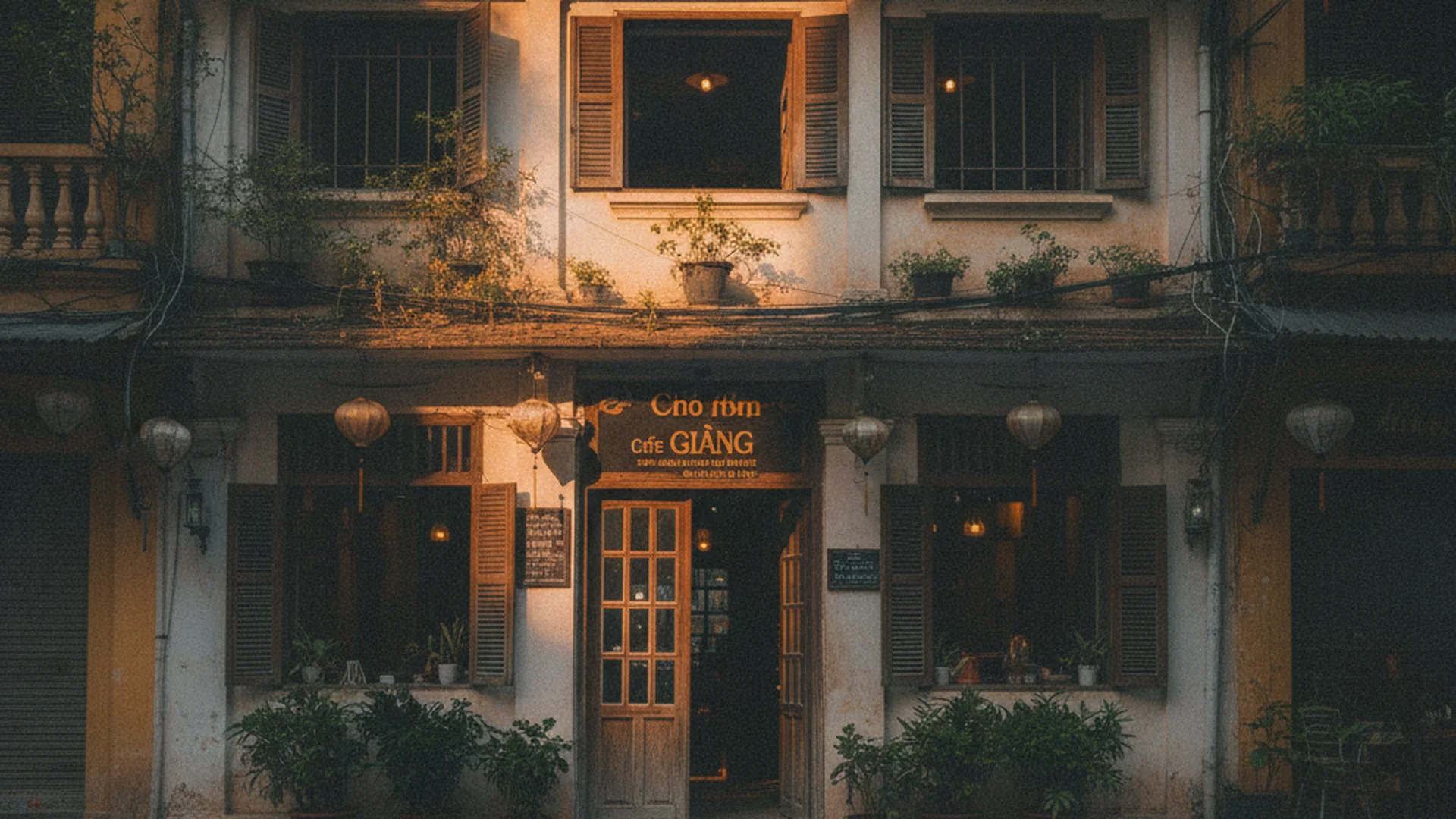
Egg coffee — cà phê trứng — traces its origin to 1946, when Nguyen Van Giang, a bartender at the Sofitel Legend Metropole Hotel in Hanoi, replaced scarce wartime milk with whipped egg yolk to create a creamy topping for strong Vietnamese Robusta coffee. The result was a custard-like foam layered over a dense, bitter brew — a combination locals have compared to liquid tiramisu. Giang later opened Café Giảng in Hanoi's Old Quarter in the 1960s, where the original family recipe, unchanged in its essentials since 1946, is still served today at 39 Nguyen Huu Huan in Hoan Kiem District.
The classic egg coffee trail covers three addresses in Hoan Kiem District, all within a 15-minute walk of each other. Café Giảng (39 Nguyen Huu Huan) remains the canonical reference point, with additional city branches at 57 Trang Tien and a counter at Lotte Mall Tay Ho. Café Dinh (13 Dinh Tien Hoang), opened in 1987 by Nguyen Van Giang's daughter Ms. Bich, offers a second-floor balcony overlooking Hoan Kiem Lake and its own family variation. Café Pho Co (11 Hang Gai), accessed through a silk shop on the ground floor, serves egg coffee from a rooftop with lake views. Each venue whips egg yolk and sweetened condensed milk into a thick foam over Robusta brewed in a traditional phin drip filter, then keeps the cup warm inside a small bowl of hot water to prevent the egg cream from cooling or developing an off flavor.
Contemporary cafés have extended the format into variants that use cocoa, matcha, white beans, and coconut cream while preserving the layered egg-foam structure. Cong Caphe introduced coconut egg coffee across its Hanoi locations, while The Note Coffee at 64 Luong Van Can offers coconut and chocolate versions alongside the original. A salted egg-cream variation — less common among visitors but favored by some older residents — is available at Ca Bop (23B Hang Vai), pairing a sweet-savory topping with the base coffee. Iced egg coffee (cà phê trứng đá), which layers whipped mousse over cold-brewed coffee, has become routine in Old Quarter cafés, particularly in summer months when temperatures in Hanoi regularly exceed 35°C. Vietnam is the world's second-largest coffee producer, and Robusta — the variety used in all these preparations — accounts for the majority of that output, providing the high-caffeine, low-acidity base that balances the sweetness of the egg cream.
Key facts & good to know
What is Hanoi egg coffee and how is it prepared?
Egg coffee (cà phê trứng) is a Hanoi drink invented in 1946, combining whipped egg yolk, sweetened condensed milk, and strong Robusta coffee into a custard-like foam. Drink the foam with a spoon first, then stir and sip the remaining layers.
Nguyen Van Giang, a bartender at the Sofitel Legend Metropole Hotel, created the drink in 1946 as a substitute for milk that was scarce during wartime. He whipped egg yolk with sweetened condensed milk until it formed a thick, velvety foam, then spooned it over a shot of Vietnamese Robusta brewed through a phin drip filter. The result is a layered drink with a dense, custard-like top and a strong, bitter coffee base — a combination locals describe as similar to tiramisu in texture.
Robusta is central to the recipe's balance. As the backbone of Vietnamese coffee production, it carries a bold, high-caffeine profile that cuts through the sweetness of the egg cream. The cup is served inside a small bowl of hot water — or over a candle — to hold the drink at the correct temperature and prevent the egg foam from cooling too quickly or developing an off-taste. An iced version (cà phê trứng đá) layers whipped egg mousse over cold-brewed coffee and is widely served during Hanoi's hot summers.
To drink it correctly, use the spoon provided to eat the foam from the top first. Once the foam layer is partially consumed, stir the remaining cream into the coffee below. Note that the drink contains raw egg yolk, sweetened condensed milk, and significant added sugar, making it high in both dairy and calories. Those with egg allergies or dairy intolerances should confirm ingredients before ordering.
Authentic egg coffee is made with raw egg yolk, not cooked. Travelers with compromised immune systems, pregnant guests, or those with egg or dairy allergies should avoid the drink or request a coconut-based alternative. The condensed milk adds substantial sugar; diabetic travelers should factor this into intake.
Plan a Hanoi trip
Where to stay, when to go, and how to combine the highlights of Hanoi into a paced stopover.
Which cafes serve the original recipe in the Old Quarter?
Café Giảng (39 Nguyen Huu Huan) is the originating venue, still using the family recipe from 1946. Café Dinh (13 Dinh Tien Hoang) and Café Pho Co (11 Hang Gai) offer close variants. All three are in Hoan Kiem District, walkable within 15 minutes of each other.
Café Giảng opened in the 1960s after founder Nguyen Van Giang left the Metropole to serve the public directly. The address at 39 Nguyen Huu Huan sits down a narrow alleyway in Hoan Kiem, with seating spread across small interior floors. The exact recipe remains a family secret, with rumored additions of butter and cheese alongside the egg yolk and condensed milk. A second branch at 57 Trang Tien and a counter at Lotte Mall Tay Ho provide more accessible alternatives for groups with mobility constraints, since the original location involves uneven stairs and limited floor space.
Café Dinh at 13 Dinh Tien Hoang was opened in 1987 by Ms. Bich, Nguyen Van Giang's daughter, and carries its own variation of the family recipe. The second-floor balcony overlooks Hoan Kiem Lake directly, which means seating fills quickly on weekend mornings and during public holidays — group bookings are not accepted, and capacity is limited to roughly a dozen tables. Café Pho Co at 11 Hang Gai is accessed through a silk shop on the ground floor, requiring guests to walk through the store and up steep stairs to reach a rooftop with lake views. DMC groups larger than eight should plan staggered entry at both venues.
Classic egg coffee cafes: addresses, access, capacity, and price
| Cafe | Address | Access notes | Approx. seating | Egg coffee price (VND) | Peak hours |
|---|---|---|---|---|---|
| Café Giảng (main) | 39 Nguyen Huu Huan, Hoan Kiem | Narrow alley, steep interior stairs, uneven floors | ~30 seats across floors | 35,000–50,000 | 7–9 AM, 8–10 PM |
| Café Giảng (Trang Tien) | 57 Trang Tien, Hoan Kiem | Street-level, easier access | ~40 seats | 35,000–50,000 | 8–10 AM, 5–7 PM |
| Café Dinh | 13 Dinh Tien Hoang, Hoan Kiem | Second-floor walk-up, lake balcony, no lift | ~12 tables | 35,000–50,000 | 7–9 AM weekends |
| Café Pho Co | 11 Hang Gai, Hoan Kiem | Entry through silk shop, steep rooftop stairs | ~20 seats | 40,000–55,000 | 9–11 AM, 3–5 PM |
| Sofitel Metropole (La Terrasse/Le Club) | 15 Ngo Quyen, Hoan Kiem | Hotel lobby access, lift available, full accessibility | Full restaurant | 150,000–200,000 | Breakfast & afternoon |
Seating figures are estimates based on venue descriptions; confirm group capacity directly with each cafe before arrival. The Sofitel price reflects hotel-grade pricing and uses free-range eggs sourced daily from a local farm.
Where can I find modern variations and spiked options?
Several Old Quarter cafes and chains offer egg coffee variants using cocoa, matcha, coconut, and salted egg toppings. Rum and cinnamon versions exist at select evening venues. Coconut coffee provides a dairy-free, egg-free alternative for non-egg drinkers.
The spread of electric mixers enabled cafes to experiment beyond the original recipe while keeping the layered foam structure intact. Cong Caphe, a Hanoi chain with multiple city locations, introduced coconut egg coffee — replacing some dairy with coconut cream — which has become one of the more widely ordered variants among visitors. The Note Coffee at 64 Luong Van Can serves coconut and chocolate egg coffee alongside its original, and its interior walls covered in sticky notes make it a high-traffic stop that fills quickly after 10 AM on weekends.
A salted egg variation exists at Ca Bop (23B Hang Vai), where the topping uses a salted egg cream for a sweet-savory contrast. It is less common on tourist-facing menus but available on request at the counter. For travelers who avoid eggs entirely, coconut coffee — brewed Robusta topped with whipped coconut cream rather than egg foam — is the functional dairy-adjacent alternative offered at Cong Caphe and The Note Coffee. Rum-spiked versions appear on evening menus at select cocktail-adjacent cafes in the Old Quarter; alcohol content in these is modest but unlabeled, so guests with alcohol restrictions should ask staff directly before ordering.
Egg coffee variants: flavor, venue, dietary notes, and price
| Variant | Key ingredient difference | Example venue | Address | Dietary note | Approx. price (VND) |
|---|---|---|---|---|---|
| Classic egg coffee (hot) | Egg yolk, condensed milk, Robusta | Café Giảng | 39 Nguyen Huu Huan | Contains raw egg, dairy, high sugar | 35,000–50,000 |
| Iced egg coffee | Cold-brewed base, chilled egg mousse | Most Old Quarter cafes | Various | Contains raw egg, dairy | 40,000–55,000 |
| Coconut egg coffee | Coconut cream blended with egg foam | Cong Caphe | Multiple Hanoi locations | Dairy-reduced; still contains egg | 45,000–60,000 |
| Chocolate/cocoa variant | Cocoa powder mixed into egg cream | The Note Coffee | 64 Luong Van Can | Contains egg, dairy | 45,000–60,000 |
| Matcha egg coffee | Matcha powder layered with egg foam | Various modern cafes | Old Quarter area | Contains egg, dairy | 50,000–65,000 |
| Salted egg coffee | Salted egg cream topping | Ca Bop | 23B Hang Vai | Contains egg, dairy, higher sodium | 40,000–55,000 |
| Rum/spiked egg coffee | Rum added to coffee base or cream | Select evening bars, Old Quarter | Various | Contains alcohol; content unlabeled | 60,000–90,000 |
| Coconut coffee (no egg) | Coconut cream only, no egg | Cong Caphe, The Note Coffee | Multiple locations | Egg-free; contains coconut dairy substitute | 40,000–55,000 |
Prices are indicative ranges based on provided facts. Alcohol content in rum variants is not standardized across venues — confirm with staff. Coconut coffee without egg is the most practical option for guests with egg allergies.
How should I sequence a self-guided walking route?
Start at Hoan Kiem Lake and walk the Old Quarter loop visiting three to four cafes over 1.5 to 2 kilometers. All major stops are under 15 minutes apart on foot. Visit on a weekday between 2 PM and 4 PM to avoid the morning rush and post-dinner crowds.
Begin at the southern edge of Hoan Kiem Lake, which places you within 200 meters of Café Dinh at 13 Dinh Tien Hoang. From there, walk north along Dinh Tien Hoang and turn west onto Hang Gai — approximately 350 meters — to reach Café Pho Co at number 11. Continue northwest for roughly 400 meters along Hang Gai and Luong Van Can to The Note Coffee at 64 Luong Van Can if a modern variant stop is of interest. Double back east along Hang Bac and north on Nguyen Huu Huan to reach Café Giảng at number 39, adding approximately 500 meters. Total walking distance for the full loop is under two kilometers.
The cafes open early — most by 7 AM — but the 7 to 9 AM window is also the most congested, with locals commuting alongside tour groups. The post-dinner crowd peaks between 8 and 10 PM. A 2 to 4 PM weekday window gives reasonable seating availability at all four stops and allows enough time to drink each order properly, including using a spoon on the foam before stirring. Note that Café Pho Co requires navigating through the silk shop at street level before climbing to the rooftop, which adds five to ten minutes of transit time per visit and may be a constraint for groups moving on a fixed schedule.
What are the costs, payment methods, and ordering norms?
Egg coffee costs VND 35,000 to 65,000 at most Old Quarter cafes. Small venues rely on cash or domestic QR bank transfers; credit card acceptance is limited. Order hot with 'nóng' or iced with 'đá.' Common local pairings include sunflower seeds or plain bánh mì.
At the classic venues — Café Giảng, Café Dinh, Café Pho Co — standard egg coffee falls between VND 35,000 and 55,000. Modern variants with matcha, cocoa, or salted egg typically range from VND 50,000 to 65,000. The Sofitel Metropole's version sits significantly higher at an estimated VND 150,000 to 200,000, reflecting hotel-grade pricing. Cash in Vietnamese dong is the most reliable payment method across all small and mid-size cafes. Some venues accept domestic bank QR codes (VietQR), but international cards — including Visa and Mastercard — are often declined for transactions under VND 200,000 at cafes without dedicated point-of-sale terminals. Carry small-denomination notes of VND 10,000 to 50,000 to avoid change issues.
When ordering, use 'nóng' (pronounced nong) for hot and 'đá' (da) for iced. Most staff at the trail's main stops have enough experience with non-Vietnamese speakers to understand a pointed gesture at the menu, but knowing these two words speeds up the transaction at busy counters. Locals commonly pair egg coffee with a small plate of roasted sunflower seeds (hướng dương) or a plain bánh mì, using the bread to offset the richness of the egg cream. Neither pairing is mandatory, but both are typically available at or near the cafes and cost VND 5,000 to 15,000 additionally.
Hanoi attractions & tickets
Pre-purchased entrance tickets, private transfers and certified guides — no queues, no logistics hassle.
Building a hanoi itinerary for your clients?
Send us your dates and pace — we return a realistic, booked-and-paced plan with net rates, not a generic template.
Want this tailored to your dates?
We run these routes ourselves. Send your dates, group size and pace and our Hanoi team will build a custom version — with real prices, not estimates.
Frequently asked questions
People also ask
Verified sources
- ATL DMC booking log · 12,000+ trips since 2011
- Michelin Guide — How to Make Vietnam's Iconic Egg Coffee the MICHELIN Way · https://guide.michelin.com/th/en/article/dining-in/how-to-make-vietnam-egg-coffee-the-michelin-way
- Wikipedia — Egg Coffee · https://en.wikipedia.org/wiki/Egg_coffee
- Vietcetera — The History of Egg Coffee · https://vietcetera.com/en/the-history-of-egg-coffee
- Café Giảng Official Website — Famous Egg Coffee since 1946 · https://cafegiang.vn/
- Nguyen Coffee Supply — The History of Vietnamese Egg Coffee · https://nguyencoffeesupply.com/blogs/news/history-of-vietnamese-egg-coffee
- Hanoi Old Quarter Guide — Egg Coffee Hanoi: Discover the Unique Flavor and Culture · https://hanoioldquarterguide.com/egg-coffee-hanoi.html
Turn this guide into a trip
The products we actually run for this route — book direct, no OTA markup.
Plan your custom trip with Phuong Le
Phuong Le
“Tell us your dates and pace — we'll turn this guide into a realistic, booked-and-paced trip for you, not a generic template.”
Plan my trip with our team →About the authors
Phuong Le · primary author
Specialty: Hanoi · Halong Bay · Vietnam itineraries.
Cross-category lattice
Plan your trip
Practical
Related travel guides
1× per month · pillar guides + new itineraries
Get our newest pillar guides + quarterly itinerary updates delivered. No spam, no promotions, just travel-guide content. Unsubscribe anytime.