Quick answer
60 km W of Hanoi (1.5–2 hr). Hours 06:00–18:00; entry 60,000 VND (2026). Thang Long Ave → Ho Chi Minh Rd, or bus to Xuan Khanh + taxi. ~600 steps to Upper Temple; French church ruins; download offline map. Soak at Tan Da or Khoang Xanh; add Duong Lam.
Why this guide
About this guide
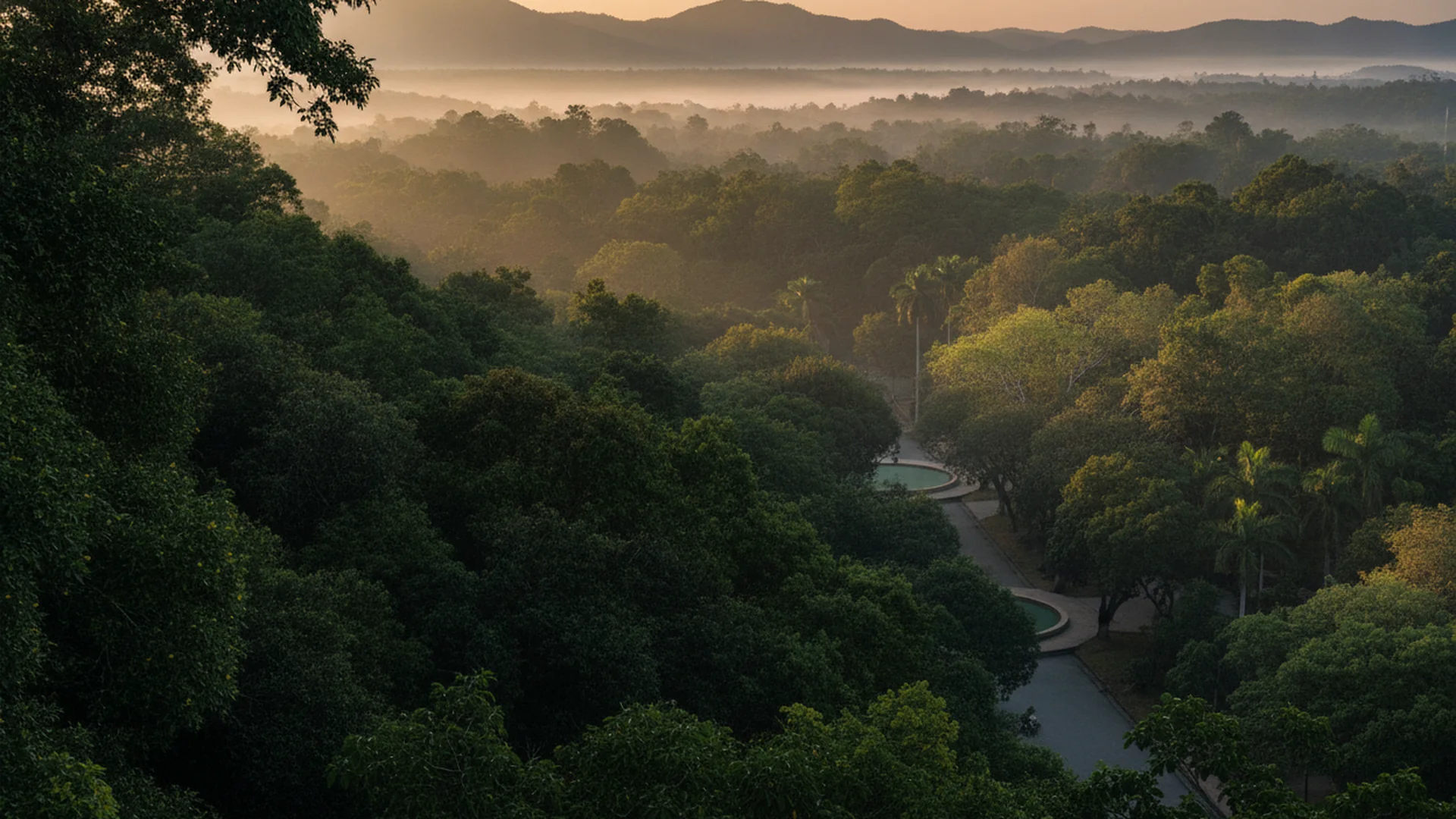
Ba Vì National Park sits approximately 48–60 km west of central Hanoi in the Ba Vì mountain range, covering roughly 10,815 hectares that straddle Ba Vì District and parts of Hòa Bình Province. The drive from Hanoi takes 1.5 to 2 hours via Thăng Long Boulevard and National Road 32. The park's three main peaks — Vua (1,296 m), Tân Viên (1,226 m), and Ngọc Hoa (1,131 m) — are regularly wrapped in low cloud, and temperatures above 500 m run noticeably cooler than the plains below, averaging around 23 °C between April and October while Hanoi can exceed 35 °C in summer.
The park holds 2,181 documented plant species, of which 64 appear in Vietnam's Red Book of endangered species, and over 280 species have recorded medicinal uses that support the Dao ethnic minority community's traditional herbal medicine practices. Fauna records total 342 species: 65 mammals, 169 birds, 30 reptiles, and 27 amphibians, with civet, binturong, and silver pheasant (Lophura nycthemera) among the notable residents. Visitors can also explore an Orchid Garden, a Cactus Garden preserving up to 1,200 cactus species, and organised bird-watching routes through the forest. Cultural sites include Đền Thượng at 1,227 m — dedicated to the Mountain God Tân Viên Sơn Thánh and recognised as a national-level historical relic in 2008 — along with Đền Trung and Đền Hạ, reached by roughly 500 stone steps through ancient forest.
Beyond the trails, the French colonial era left a visible imprint on the mountain slopes: moss-draped walls of a ruined stone church at around 800 m, villa foundations, a former military zone, and a political prison are encountered naturally during the ascent between 600 m and 800 m. That colonial period also introduced dairy farming to the area, a practice that survives today in the Ba Vì Milk Factory and farm cafés at the mountain's base. For post-trek relaxation, Tản Đà Spa Resort — built in the style of a traditional Red River Delta palace — offers natural hot springs, mud baths, herbal baths, and wet steam baths just outside the park boundary, with Ohayo OnSen & Spa providing an additional option nearby. The park is open daily from approximately 6:00 am to 7:00 pm; the standard adult entrance fee is 60,000 VND per person.
Key facts & good to know
How do I travel the 60km from Hanoi to Ba Vi, and what does it cost?
The drive from Hanoi to Ba Vi National Park takes 1.5–2 hours via Thang Long Boulevard and National Road 32. Options include public bus (routes 71/74) plus local taxi, private car hire, or motorbike. The adult entrance fee is 60,000 VND.
Public buses on routes 71 and 74 run from Hanoi toward Ba Vi District, but neither drops passengers at the park gate; travellers must arrange a local taxi or motorbike taxi for the final stretch to the entrance. The combined journey typically takes longer than driving and requires coordinating two separate legs, making it more practical for budget-conscious solo travellers than for groups with luggage or young children.
Private car hire remains the most straightforward option for day-trippers. The route follows Thang Long Boulevard westward before turning onto National Road 32 toward Ba Vi District. Once inside the park, vehicles may park at the Cote 400 zone near the lower facilities or continue to the Cote 1100 parking area, which is closer to the upper trail access points for Tan Vien and King Peaks. Motorbike riders follow the same road and can park at designated areas near each elevation zone.
Transport options from Hanoi to Ba Vi National Park (2026)
| Mode | Approx. distance | Travel time | Estimated cost | Notes |
|---|---|---|---|---|
| Public bus (71/74) + local taxi | ~60 km | 2–2.5 hrs total | Low (bus fare + taxi supplement) | Bus does not reach park gate; taxi required for final leg |
| Private car hire (return) | ~60 km | 1.5–2 hrs | Negotiated with operator | Door-to-gate; most convenient for groups |
| Motorbike (self-ride) | ~60 km | 1.5–2 hrs | Fuel cost only | Flexible; park at Cote 400 or Cote 1100 lots |
| Park entrance fee (adult) | — | — | 60,000 VND per person | Payable at main gate; opens 6:00 am |
Travel times assume clear traffic on Thang Long Boulevard. Weekend mornings can add 20–30 minutes leaving Hanoi. Vehicle parking fees apply at Cote 400 and Cote 1100 zones inside the park.
The park gate closes at 7:00 pm. If you plan to combine the summit trails with an afternoon hot-spring stop, factor in descent time from 1,100 m — the upper road can be narrow and slippery after rain. Confirm your return vehicle or driver availability before entering the upper zones, as phone signal is unreliable above 800 m.
Plan a Hanoi trip
Where to stay, when to go, and how to combine the highlights of Hanoi into a paced stopover.
Which months offer clear summit views or the Mexican sunflower bloom?
September to November gives the most reliable dry weather and the Da Quy (Mexican sunflower) bloom in October–November. March to May is a second dry window. Summer months (May–August) are cooler than Hanoi at 1,200 m but bring rain and slippery trails.
Ba Vi sits at up to 1,296 m elevation, which produces a consistent temperature drop compared to central Hanoi. From April through October, average mountain temperatures hover around 23°C while Hanoi can exceed 35°C in summer, making the park a practical weekend retreat from lowland heat. However, above 500 m, fog envelops the peaks almost daily regardless of season, so clear panoramic views are never guaranteed — October and November offer the highest probability of a clear morning window.
The Da Quy (Mexican sunflower, Tithonia diversifolia) blooms along the upper trails and roadsides primarily in October and November, coinciding with the post-rainy-season dry spell. Winter months — roughly December through February — can produce cloud inversions where the summit emerges above a low cloud layer, a visually distinctive phenomenon, though temperatures drop noticeably and mist is persistent. The rainy season from June through August brings reduced trail visibility, waterlogged paths, and a higher risk of slipping on stone steps.
Ba Vi seasonal conditions by month
| Period | Weather pattern | Avg. mountain temp (~1,200 m) | Trail conditions | Key attraction |
|---|---|---|---|---|
| Mar–May | Dry, mild | ~20–23°C | Good; some morning mist | Forest greenery; manageable humidity |
| Jun–Aug | Rainy season | ~23°C | Slippery stone steps; low visibility | Cooler than Hanoi (35°C+) but wet |
| Sep–Nov | Post-rain dry spell | ~18–23°C | Best overall; trails firm | Da Quy bloom peaks Oct–Nov |
| Dec–Feb | Cool, misty | Below 18°C at summit | Passable; fog frequent | Cloud inversions above 1,000 m |
Temperature figures are approximations based on the park's published data and the general lapse rate at ~1,200 m elevation. Mist above 500 m is common on most days year-round.
What are the distances, step counts, and trail conditions for Ba Vi's landmarks?
Tan Vien Peak's Upper Temple involves roughly 500 stone steps from the upper access point. King Peak at 1,296 m hosts the Ho Chi Minh Temple. French colonial ruins lie between 600–800 m elevation along the ascent road.
Den Thuong (Upper Temple) stands at 1,227 m on Tan Vien Peak and is reached by approximately 500 stone steps through ancient forest from the upper trail access. The steps are uneven and can be mossy, requiring care in wet conditions. The temple complex — dedicated to Tan Vien Son Thanh — was recognised as a national-level historical and cultural relic in 2008 alongside Den Trung and Den Ha, which sit at lower elevations on the same mountain and can be visited in sequence during the ascent.
King Peak (Vua Peak) at 1,296 m is the park's highest point and holds the Ho Chi Minh Temple (Den Bac Ho). The Bao Thien Tower, completed in 2010 and standing 13 floors at 26.9 m with a brass bell at its summit, is also accessible in the upper zone. French colonial ruins — including the roofless stone church with moss-covered walls, remnants of a former military camp, and villa foundations — are distributed between 600 m and 800 m and are encountered naturally while driving or walking up the mountain road. The Cactus Garden, which preserves up to 1,200 cactus species, is located in the lower park zone and can be visited without a strenuous climb.
Ba Vi landmarks: elevation, steps, and access
| Landmark | Elevation | Steps / distance | Access point | Condition notes |
|---|---|---|---|---|
| Den Thuong (Upper Temple) | 1,227 m | ~500 stone steps | Upper trail from Cote 1100 | Uneven; mossy in rain |
| Den Bac Ho (Ho Chi Minh Temple) | 1,296 m (King Peak) | Summit trail from upper zone | Cote 1100 area | Highest point; mist frequent |
| Bao Thien Tower | Upper zone | Near summit access road | Cote 1100 area | 13 floors, 26.9 m; brass bell |
| French colonial church ruins | ~800 m | Along ascent road | Between Cote 400–1100 | Roofless; walls intact; moss-covered |
| Former military camp ruins | 600–800 m | Along ascent road | Between Cote 400–1100 | Distributed; no marked trail |
| Cactus Garden | Lower park zone | Flat walk | Near Cote 400 | Up to 1,200 cactus species |
Step counts are approximate. Den Trung and Den Ha sit at intermediate elevations below Den Thuong and can be included in the same ascent.
Which hot springs and resorts near Ba Vi offer day passes?
Tan Da Spa Resort is the closest named hot-spring facility to Ba Vi National Park, offering mineral pools, mud baths, herbal baths, and steam rooms. Ohayo OnSen and Spa is a second option in the Ba Vi area. Thien Son–Suoi Nga and Ao Vua operate as resort-park complexes nearby.
Tan Da Spa Resort sits just outside the national park boundary and is built in a traditional Red River Delta palace architectural style. Its facilities include natural hot springs alongside mud baths, herbal baths, and wet steam baths set up for individuals, couples, and families. The resort functions as both a wellness stop and a cultural reference point given its architectural design, making it a practical add-on after a morning of summit trekking.
Ohayo OnSen and Spa (Cong Vien Khoang Nong Ohayo) is a second hot-spring venue expanding the thermal leisure options in the Ba Vi area. Thien Son–Suoi Nga and Ao Vua are resort and eco-park complexes that include waterfalls, swimming pools, and family recreation areas in the broader Ba Vi foothills zone. Travellers should contact each venue directly for current 2026 day-use pass pricing and pool temperature specifications, as these figures are subject to seasonal adjustment and were not published in the source data available for this guide.
Hot spring and resort facilities near Ba Vi National Park
| Facility | Type of pools/baths | Family facilities | Architectural style | Location relative to park |
|---|---|---|---|---|
| Tan Da Spa Resort | Natural hot springs, mud, herbal, wet steam | Yes — individual, couple, family formats | Traditional Red River Delta palace style | Just outside national park boundary |
| Ohayo OnSen & Spa | Mineral hot springs | Not specified in source data | Not specified in source data | Ba Vi area |
| Thien Son–Suoi Nga | Waterfalls, swimming pools | Yes — eco-park and family recreation | Eco-resort | Ba Vi foothills |
| Ao Vua | Swimming pools, stream access | Yes — resort and recreation complex | Resort complex | Ba Vi foothills |
Day-use pass prices and pool temperatures were not confirmed in the source data for 2026. Contact each venue directly before visiting to verify current admission rates and available facilities.
How do I schedule a one-day Ba Vi itinerary and manage food logistics?
Start at the park gate by 7:00 am to reach the upper temples before midday mist thickens. Descend by early afternoon for hot springs or Duong Lam Ancient Village. There are no dining facilities in the upper park zones — carry lunch.
A practical sequence begins with arrival at the main gate around 7:00 am, which allows 2–3 hours on the upper trails before cloud cover typically thickens toward midday. From the Cote 1100 parking area, walk the approximately 500 stone steps to Den Thuong on Tan Vien Peak, then continue or descend to King Peak for the Ho Chi Minh Temple. Budget around 3–4 hours total for the upper zone, including time at the French colonial ruins encountered on the descent between 600 m and 800 m.
By early afternoon, leave the park and drive to either Tan Da Spa Resort for a hot-spring session or head toward Duong Lam Ancient Village — a 9th-century village roughly 30 minutes from the park that offers a distinct cultural complement to the mountain morning. There are no restaurants or food stalls in the upper park zones above Cote 400; the only reliable food options are at the lower base area and along the access road outside the gate. Packing a lunch or substantial snacks is necessary for anyone spending the full morning on the upper trails.
There are no restaurants, stalls, or vending points above the Cote 400 lower zone inside Ba Vi National Park. If your itinerary includes the upper temples or King Peak, carry water and food from outside the gate. The park closes at 7:00 pm — allow sufficient descent time to avoid being on the upper mountain road after dark, particularly in wet weather when stone steps and narrow roads are slippery.
Hanoi attractions & tickets
Pre-purchased entrance tickets, private transfers and certified guides — no queues, no logistics hassle.
Building a hanoi itinerary for your clients?
Send us your dates and pace — we return a realistic, booked-and-paced plan with net rates, not a generic template.
Want this tailored to your dates?
We run these routes ourselves. Send your dates, group size and pace and our Hanoi team will build a custom version — with real prices, not estimates.
Frequently asked questions
People also ask
Verified sources
- ATL DMC booking log · 12,000+ trips since 2011
- Wikipedia – Ba Vì National Park · https://en.wikipedia.org/wiki/Ba_V%C3%AC_National_Park
- Vietnam Airlines Travel Guide – Ba Vi National Park · https://www.vietnamairlines.com/us/en/plan-book/travel/travel-guide/ba-vi-national-park
- Vietnam Travel – Ba Vi National Park · https://vietnamtravel.com/ba-vi-national-park/
- Hanoi Pearl Hotel – Ba Vi National Park Guide · https://www.hanoipearlhotel.com/helpful-guides-and-information/things-to-do-in-hanoi/ba-vi-national-park
- Local Vietnam – Ba Vi National Park Travel Guide 2026 · https://localvietnam.com/hanoi/ba-vi-national-park/
- Vietnam Discovery – Ba Vi National Park · https://vietnamdiscovery.com/hanoi/activities/ba-vi-national-park/
Turn this guide into a trip
The products we actually run for this route — book direct, no OTA markup.
Plan your custom trip with Phuong Le
Phuong Le
“Tell us your dates and pace — we'll turn this guide into a realistic, booked-and-paced trip for you, not a generic template.”
Plan my trip with our team →About the authors
Phuong Le · primary author
Specialty: Hanoi · Halong Bay · Vietnam itineraries.
Cross-category lattice
Plan your trip
Practical
Related travel guides
1× per month · pillar guides + new itineraries
Get our newest pillar guides + quarterly itinerary updates delivered. No spam, no promotions, just travel-guide content. Unsubscribe anytime.